A screen can fail before it is fitted if the opening is out of square, the sill drains poorly, or the fixing surface cannot hold the frame. By checking the opening, recording usable dimensions, matching the screen to the movement pattern, and confirming the fixing design, you can order a screen that operates safely and remains removable for maintenance.
Key takeaways
- Check jambs, sill, head, corners, and mounting surface before measuring.
- Measure the opening at multiple points and record the smallest clearance.
- Match the screen layout to how the window or door moves.
- Confirm threshold support, fixing method, finished size, and warranty in writing.
Is the opening ready for a mosquito screen?
Confirm that the opening is physically suitable before taking order dimensions. This mosquito screen installation checklist starts with the frame: check window frame before screen fitting for plumb jambs, a level head and sill, square corners, structural soundness, and a clean, dry mounting surface.
- Inspect for loose plaster, cracked tile edges, powdery paint, failed silicone joints, damaged uPVC profiles, weak aluminium sections, and masonry that cannot hold a screw or anchor.
- Remove or record projecting beads, trickle vents, handles, catches, blinds, curtains, security grilles, nearby walls, and sill drainage slots.
- Keep sill weep holes and the drainage path below a door threshold open. Check that a door screen will not create a trip edge or obstruct the primary door’s closing.
Measure both diagonals before choosing a rigid rectangular panel. A substantial difference identifies an out-of-square opening; forcing the panel into it can create corner gaps, binding rollers, or uneven seals.
| Opening condition | Suitable response | What can go wrong |
|---|---|---|
| Square, sound, and unobstructed | Rigid framed screen | Normal fitting is possible |
| Out-of-square or tapered | Packers, corrective frame, or non-rigid screen | A rigid panel binds or leaves gaps |
| Weak, damp, damaged, or obstructed | Repair, relocate, or redesign first | Fixings fail and drainage or operation is blocked |
An insect screen is not fall protection, a burglar barrier, or a child-safety guard. Where a fall hazard exists, specify a separately tested guard or window restrictor that remains effective if the screen is removed or damaged.
Which measurements determine the finished screen size?
Use the clear opening, not the nominal window or door size, to determine the finished screen dimensions. A reliable screen measurement guide starts by recording the clear opening width and height at several points. To measure window opening for mosquito net installation, record:
- Width at the head, middle, and sill; keep the smallest usable width, every larger reading, and each difference.
- Height at the left jamb, centre, and right jamb; keep the smallest usable height, every larger reading, and each difference.
- Frame depth and reveal depth, available fixing depth, sill condition, and the flat mounting area for a cassette, guide, hinge, or frame.
- Clearance around handles, locks, sash catches, shutters, curtains, blinds, grills, projecting walls, and nearby hardware.
| Measurement pattern | What it indicates | Installation consequence |
|---|---|---|
| Equal readings | A regular opening | Standard deductions may suit, subject to the selected system |
| Width or height differences | Taper, bowing, or a stepped reveal | Packers or a different frame deduction may be needed |
| A large diagonal difference | An out-of-square opening | Confirm the squareness allowance before production |
Do not calculate the final deduction yourself from these figures. Ask the manufacturer or installer to confirm the deduction, finished screen size, squareness allowance, and minimum fixing margins in writing.
For a door, record the clear passage after the screen is installed, not only the structural opening. Include the space needed for the screen leaf, guide, and primary door drainage and closing.
Which screen layout suits the opening and its movement?
Match the screen to the opening’s movement and the side available for mounting. Identify whether the substrate is uPVC, aluminium, or timber, and whether the opening is a sliding door, casement window, French door, balcony opening, or irregular reveal.
The wrong layout can foul a handle, bind against a sash, or leave gaps at the seal.
| Option | Clearance and support needed | Suitable use |
|---|---|---|
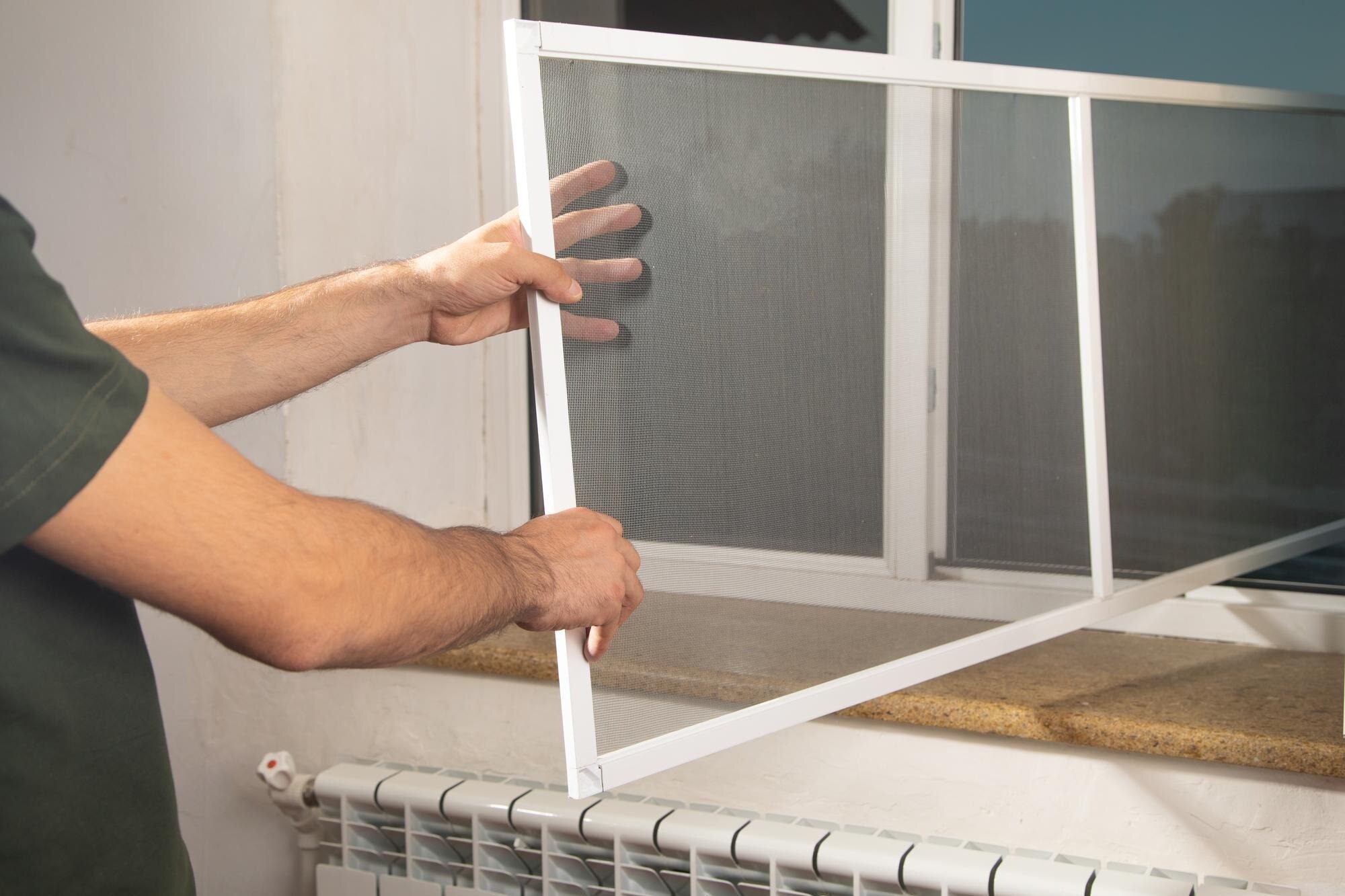
| Hinged screen | Full swing arc and a firm hinge side | Doors and casement windows with clear opening space |
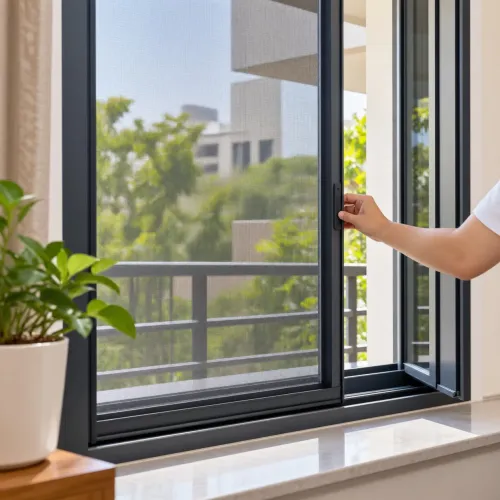
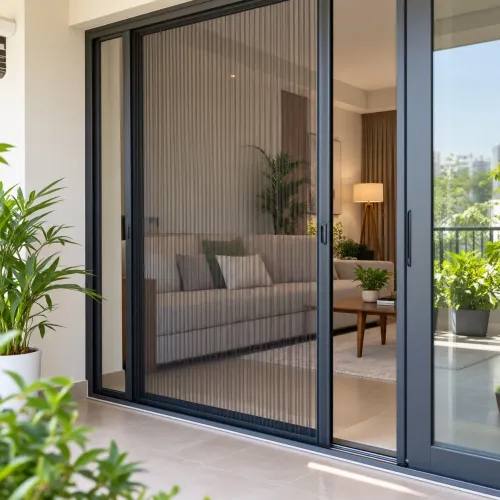
| Sliding screen | Uninterrupted track travel and aligned guides | Sliding doors and wide balcony openings |
| Retractable cassette | Space for the cassette, guides, and end stop | Openings where the screen must disappear when unused |
| Fixed panel | Stable, square seating surface | Fixed lights and reveals with little movement |
For uPVC mosquito screen compatibility, check the profile depth, glazing bead, drainage slots, handles, blinds, shutters, and security grilles before choosing an inside or outside screen installation. An inside screen is easier to clean and less exposed to weather, but it can obstruct hardware.
An outside screen preserves interior access but takes more wind, rain, dirt, and ultraviolet exposure. A casement window screen clearance check must include the sash’s entire opening arc.
Plan removal before fixing. You must be able to remove the screen for cleaning, repainting, glazing replacement, and emergency access without tearing the mesh or surrounding seal. Choose 18 by 16 mosquito mesh for mosquito exclusion; use finer mesh for biting midges only when reduced airflow and light are acceptable.
Can the threshold, tracks, and fixing surface support the installation?
The installation is supportable only after you trace the complete operating path, threshold to fixing point, before drilling or bonding anything.
1. Open and close the primary door several times. Check threshold height, floor slope, accumulated dirt, the closing line, drainage slots, and the required clear passage. A bottom guide that forms a screen bottom track trip hazard, blocks drainage, collects grit, or interferes with closing needs a ramp, recessed detail, or site-specific redesign.
2. Identify the material carrying each load: structural masonry, timber, aluminium, uPVC, insulated render, or composite panel. Choose screen anchors and screws for that substrate, including screw length, anchor type, edge distance, and sealing method. A fixing held only by render, thin cladding, or insulation is not anchored to the structural backing.
3. Record window frame drilling restrictions before selecting the mosquito screen fixing method. Concealed drainage channels, reinforcement, glazing beads, cables, warranties, and manufacturer-approved zones can rule out apparently convenient holes. Keep sill weep holes and the drainage path below a threshold open.
4. Test the actual contact surface before using magnetic, clip-in, or adhesive retention. Check paint adhesion, texture, temperature, dust, powdery masonry paint, uneven seals, and silicone contamination; weak adhesion can release the screen during operation.
5. Use mechanical retention when wind exposure or frequent operation exceeds the adhesive system’s stated limits. In coastal, industrial, or damp locations, match aluminium, stainless steel, galvanised fixings, and treated timber, then isolate dissimilar metals where the system manufacturer requires it.
What must you confirm with the installer before placing the order?
Get a written installation and product check before placing the order, not merely a quotation based on opening size. Ask the installer to record:
- The final deduction, finished screen dimensions, squareness allowance, and minimum fixing margins.
- The mounting side, fixing points, available fixing depth, removal method, and clearance from handles, catches, blinds, grilles, and adjacent walls.
- The bottom-guide detail, including threshold height, drainage, trip risk, primary-door closing, and the remaining clear passage.
- The permitted span, fixing limits, and screen wind rating. Keep this separate from the host window or door rating: a large external screen can deflect or disengage its guides while the window frame remains sound.
- The mesh aperture and material, wire or yarn diameter, coating, colour, and corrosion suitability. “Fine mesh” is not a specification; these details affect airflow, visibility, service life, and rust resistance.
- Whether the stated product meets ASTM D3656 insect screening requirements for the intended exposure. ASTM D3656 insect screening is a product specification, not proof that every screen suits a coastal, high-level, or wind-exposed opening.
Use these mosquito screen supplier questions when comparing Delmen Nets 9650012393 with another business supplier. Keep the signed drawing or measurement sheet, substrate notes, wind limits, and maintenance instructions with the order.
The fitter then has no excuse to substitute a universal fixing method or permanently bond a screen that must later be removed for cleaning, repainting, glazing replacement, or emergency access.
Related products
 | Insects Screens System Manufacturer and Supplier in Gurgaon We are leading manufacturer of Insect Screen Systems from Gurgaon. View product → |
 | Barrier free Mesh Systems Manufacturer and Supplier in Gurgaon Delmen Nets are Manufacturer & Supplier of excellent quality Barrier Free Doors Mesh Systems to our valuable... View product → |
Frequently asked questions
Is the opening ready for a mosquito screen?
Check that the jambs are plumb, the head and sill are level, the corners are square, and the frame is sound, clean, and dry.
Which measurements determine the finished screen size?
Measure width and height at several points, check diagonals, and account for the fixing clearances and operating gaps required by the screen system.
Which screen layout suits the opening and its movement?
Choose a fixed, hinged, sliding, roller, pleated, or retractable layout according to the opening’s size, access needs, and direction of movement.
What must you confirm with the installer before placing the order?
Confirm the finished dimensions, mesh type, frame colour, fixing surface, threshold or track details, operating clearance, installation scope, and warranty.
Related products
 | Mosquito Nets For uPVC Doors Manufacturer and Supplier in Gurgaon Top Grade Mosquito Nets For uPVC doors manufacturers in Gurgaon, Haryana. View product → |
 | Velcro Mesh Systems Manufacturer and Supplier in Gurgaon Manufacturer of Velcro Mesh Systems - Velcro Net offered by Delmen Nets are of high quality, It protect from the... View product → |
 | Pleated Mesh Systems Manufacturer and Supplier in Gurgaon Delmen Nets is the manufacturers and the suppliers of an excellent and superior quality of Pleated Mesh Systems... View product → |