A mosquito screen does not preserve the same airflow as an open window: its mesh, frame, seals, and cleanliness all add resistance. By matching the opening size to the insects you need to exclude and checking the complete installation, you can maintain useful ventilation without leaving gaps mosquitoes can exploit.
Key takeaways
- Smaller mesh openings improve insect protection but restrict airflow and daylight.
- Match mesh material and opening size to local pests and weather conditions.
- Seal frame edges and corners because gaps defeat an otherwise effective screen.
- Clean blocked mesh and inspect joins before insects expose protection failures.
How mesh openings change airflow, daylight, and insect protection
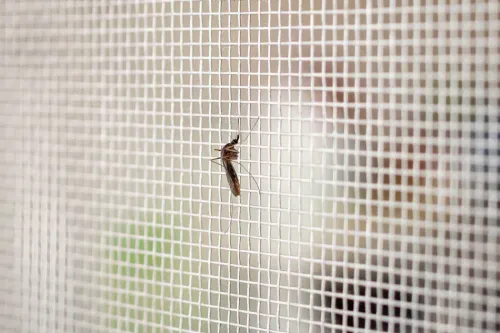
A window mosquito mesh allows ventilation because its open area lets air pass while its mesh aperture is too small for mosquitoes and flies. Airflow through mosquito screen is lower than through an un-screened window, however, because wire or yarn blocks part of the opening and creates resistance.
A nominal 16-mesh screen is a practical baseline for mosquito exclusion, but the label alone does not define the barrier. For square plain weave, opening width is approximately (25.4 ÷ mesh count) minus wire diameter, in millimetres. Two “16-mesh” screens can therefore provide different airflow and insect protection.
Finer openings improve protection against biting midges, sand flies, and other small insects. The trade-off is direct: more material occupies the window area, reducing airflow, daylight, and outward visibility while increasing resistance.
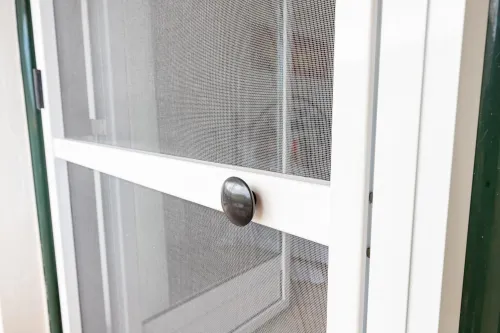
The frame matters as much as the fabric. A gap at a corner, an unsealed joint, a broken brush strip, or a warped sash can let mosquitoes enter despite a suitable aperture. The complete screen must close continuously around the window.
Insect mesh is not an air-cleaning filter. Its millimetre-scale openings do not provide a rated barrier against smoke, fine particles, or aerosols, so it cannot replace filtered ventilation.
Dust and fibres also reduce the effective open area over time. Clean the mesh when airflow feels weak; a dirty screen can make a clear window seem poorly ventilated even though the window opening has not changed.
Choose the opening and material for the pests and conditions
For ordinary mosquitoes and houseflies, start with a nominal 16 mesh mosquito screen in a dark, open-weave material. “16 mesh” is not a complete specification: for square plain weave, clear opening is approximately (25.4 ÷ mesh count) minus wire diameter, in millimetres.
A thicker wire produces a smaller opening and greater airflow resistance at the same mesh count.
| Choice | Best fit | Main trade-off |
|---|---|---|
| 16 mesh fiberglass mesh | Mosquitoes, flies, everyday windows | Good visibility and airflow; less rigid and less heat-resistant than metal |
| Fine insect mesh | Biting midges, sand flies, and very small insects | Better exclusion, but less airflow and daylight |
| Aluminium mesh | High heat, rigid frames, demanding cleaning conditions | Durable and stiff, but can corrode in salt-laden air and may dent |
| Solar-control mesh | Glare and solar-heat reduction | Lower openness increases airflow resistance and reduces visible transmittance |
Choose fine insect mesh only when the pest risk justifies the ventilation loss. Ask for the clear aperture, wire or yarn diameter, openness or open factor, and airflow resistance; do not compare products by mesh count alone.
Fiberglass mesh suits most residential windows because it resists rust and remains easy to handle. Aluminium mesh suits exposed or high-temperature locations when the frame can prevent dents and corrosion. Neither option blocks smoke, aerosols, or fine particulate matter; use a rated filter or sealed filtered-ventilation system for that purpose.
Finally, specify a continuous perimeter seal. An unsealed corner, warped sash, broken brush strip, or drainage gap defeats an otherwise suitable opening.
Position and install the screen so air passes without creating gaps
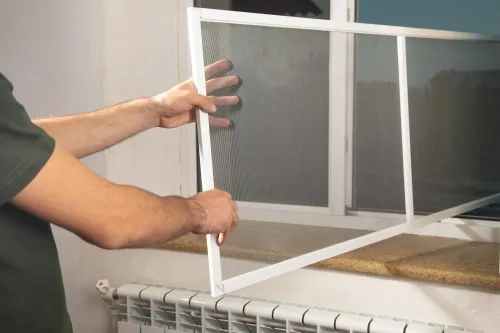
Fit the screen within the opening, not over an uneven wall surface. Good window screen installation keeps the mesh plane flat, leaves the sash fully supported, and makes the screen perimeter seal continuous on all four sides.
- Measure the sash and frame at several points. Use the smallest finished dimension, then check that the frame does not touch the moving sash, hinges, or drainage slots.
- Leave window latch clearance so the handle closes without pressing the mesh or lifting the frame. A compressed edge can open a mosquito-sized path.
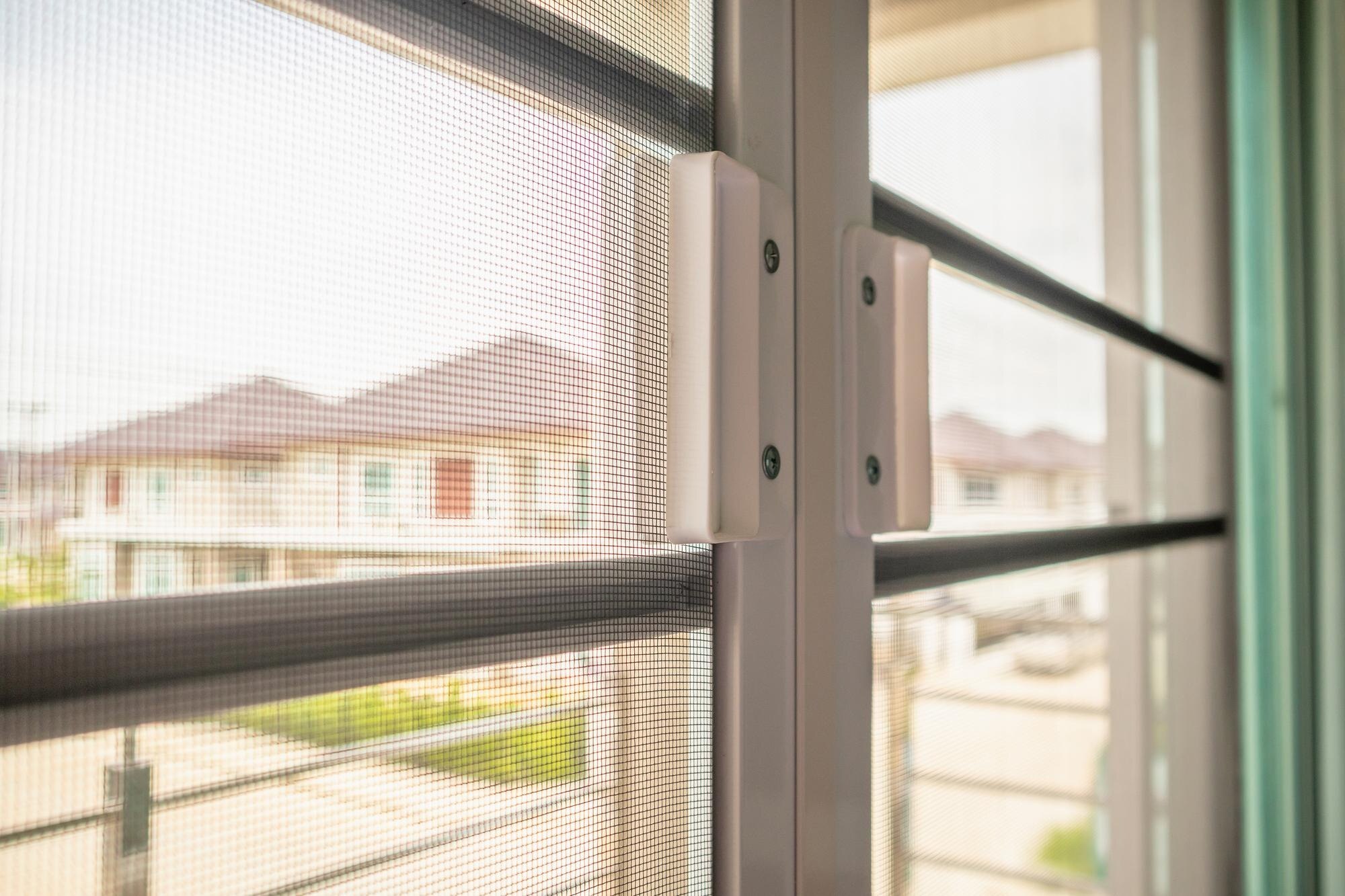
- For uPVC window mesh, use the system’s dedicated channel, gasket, magnetic strip, or clip rather than wedging mesh into the rubber weather seal. Check each corner for a joined, tight fit.
- Around an exhaust fan, fit a rigid, removable frame over the opening and seal its edges. Do not stretch loose mesh across the fan; added resistance can reduce extraction and make dust accumulate.
- Around a window air-conditioning unit, seal the side and top filler panels, then cover only the indoor-room gaps. Keep the unit’s intake, discharge, condenser, and drainage paths unobstructed.
Open the sash enough to expose a useful screened area; a narrow opening behind a thick frame will restrict airflow despite a large mesh open area. Test closure by shining a light from the darker side and checking for visible gaps, lifted corners, discontinuous brush strips, or a warped sash.
Retract or remove the screen only when insects are not entering, because parked mesh provides no barrier.
Clean the mesh and find protection failures before insects do
A dusty screen can reduce usable airflow even when the window is fully open. Dust, pollen, soot, and textile fibres block part of the mesh, increase resistance, and create dirty insect screen airflow that feels weak to occupants. Cleaning mosquito mesh is therefore a ventilation task, not just an appearance task.
1. Inspect the mesh in bright light. Look for a torn mesh panel, broken strands, stretched sections, rust, loose edges, and holes where the frame meets the fabric. A mosquito can enter through a surprisingly small opening.
2. Vacuum both sides with a soft brush, then rinse with cool or lukewarm water and mild detergent. Do not scrub coated mesh aggressively; damaged coatings can reduce visibility and speed corrosion. Let it dry before reinstalling.
3. Close and latch the window or door, then check every corner from inside and outside. A rolled, folded, or poorly seated screen provides no protection, while a bottom gap, failed magnet, misaligned latch, or missing overlap gives insects a direct route indoors.
4. Replace the screen when cleaning cannot restore open area, when the mesh has multiple holes or permanent sagging, or when the frame no longer closes tightly. Replace corroded aluminium, brittle fibreglass, and damaged tracks rather than relying on patches.
Include closure checks in regular screen maintenance. Insect mesh is not a particulate filter, so it cannot substitute for sealed filtered ventilation against smoke, fine dust, or aerosols.
Compare complete screen systems, not just mesh labels
Verify the assembled frame, seals, fasteners, and mesh—not only the mesh count. Request test data for insect screen performance, open area specification, airflow resistance, aperture size, tear or tensile strength, frame retention, dimensional stability, and insect bypass at corners. A dark solar-control mesh can cut glare while its lower openness increases airflow resistance.
Ask the supplier to verify:
- The clear aperture and geometric open area, stated beside the nominal mesh count and wire or yarn diameter.
- Airflow resistance measured on the finished system, not on loose mesh; installation position and screen area affect the result.
- Continuous contact at the sash, frame, and corners, with no gap created by Velcro, pleats, rollers, or uneven masonry.
- How the system handles removal for cleaning, because dust and soot reduce effective open area and raise pressure drop.
- Whether the specified opening excludes your target pests, including biting midges or sand flies.
| System type | What to verify | Common failure |
|---|---|---|
| Fixed framed | Frame retention, corner joints, and perimeter seal | A rigid mesh still allows insects through an unsealed edge |
| Pleated or retractable | Side channels, magnetic closure, and tension after repeated operation | Folds or rollers leave a bypass path when misaligned |
| Hook-and-loop removable | Adhesive bond, continuous fastening, and replacement access | Loose tape creates gaps and sags |
Treat “screen supplier Gurgaon” as a location search, not proof of performance. When comparing a local quotation, ask Delmen Nets 9650012393 for these same figures and inspect the installed edge seal before choosing.
Related products
 | Velcro Mesh Systems Manufacturer and Supplier in Gurgaon Manufacturer of Velcro Mesh Systems - Velcro Net offered by Delmen Nets are of high quality, It protect from the... View product → |
 | Insects Screens System Manufacturer and Supplier in Gurgaon We are leading manufacturer of Insect Screen Systems from Gurgaon. View product → |
Frequently asked questions
How does mosquito mesh affect airflow and daylight?
Mesh allows air and daylight through its open area, but wires or yarn reduce the opening and create airflow resistance. Finer mesh blocks more light and air than coarser mesh.
How do you choose the right mosquito mesh opening and material?
Match the aperture and material to the pests you need to exclude, the window location, cleaning demands, and exposure to sun, rain, or wind.
Where do window screens commonly develop insect-entry gaps?
Inspect the frame perimeter, corners, sliding overlaps, brush seals, fasteners, and any damaged mesh. A gap beside the screen can let insects in even when the mesh itself is intact.
How should you clean and inspect window mosquito mesh?
Remove loose dust with a soft brush or gentle vacuum, wash the mesh with mild soapy water, rinse it, and check for tears, stretched openings, loose edges, and blocked areas.
What should you compare beyond a mosquito mesh label?
Compare the mesh aperture, material, frame strength, edge seals, opening method, installation quality, repairability, cleaning access, and how the complete system fits your window.
Related products
 | Pleated Mesh Systems Manufacturer and Supplier in Gurgaon Delmen Nets is the manufacturers and the suppliers of an excellent and superior quality of Pleated Mesh Systems... View product → |
 | Aluminium Doors and Windows Panel Aluminium Doors and Windows Panel Manufacturer and Supplier in Gurgaon Delmen Nets is one of the leading manufacturers and suppliers of high-quality aluminium windows and doors Panels... View product → |