A large opening needs more than a sheet of mesh: the screen must fold, travel, align and close without leaving an insect-sized path around its edges. By the end, you will understand the moving parts, the measurements to record, the configurations to compare and the installation details that determine whether the screen operates smoothly.
Key takeaways
- Measure opening width, height and sill clearance at several points.
- Choose centre-opening panels for wide access and balanced daily movement.
- Keep head and sill tracks level, clean and free from obstructions.
- Match mesh strength and system design to traffic, pets and weather exposure.
How the Accordion Mesh Opens, Closes and Parks
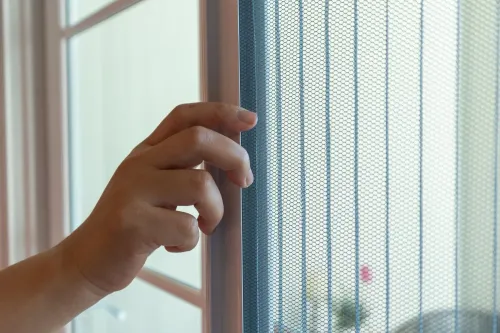
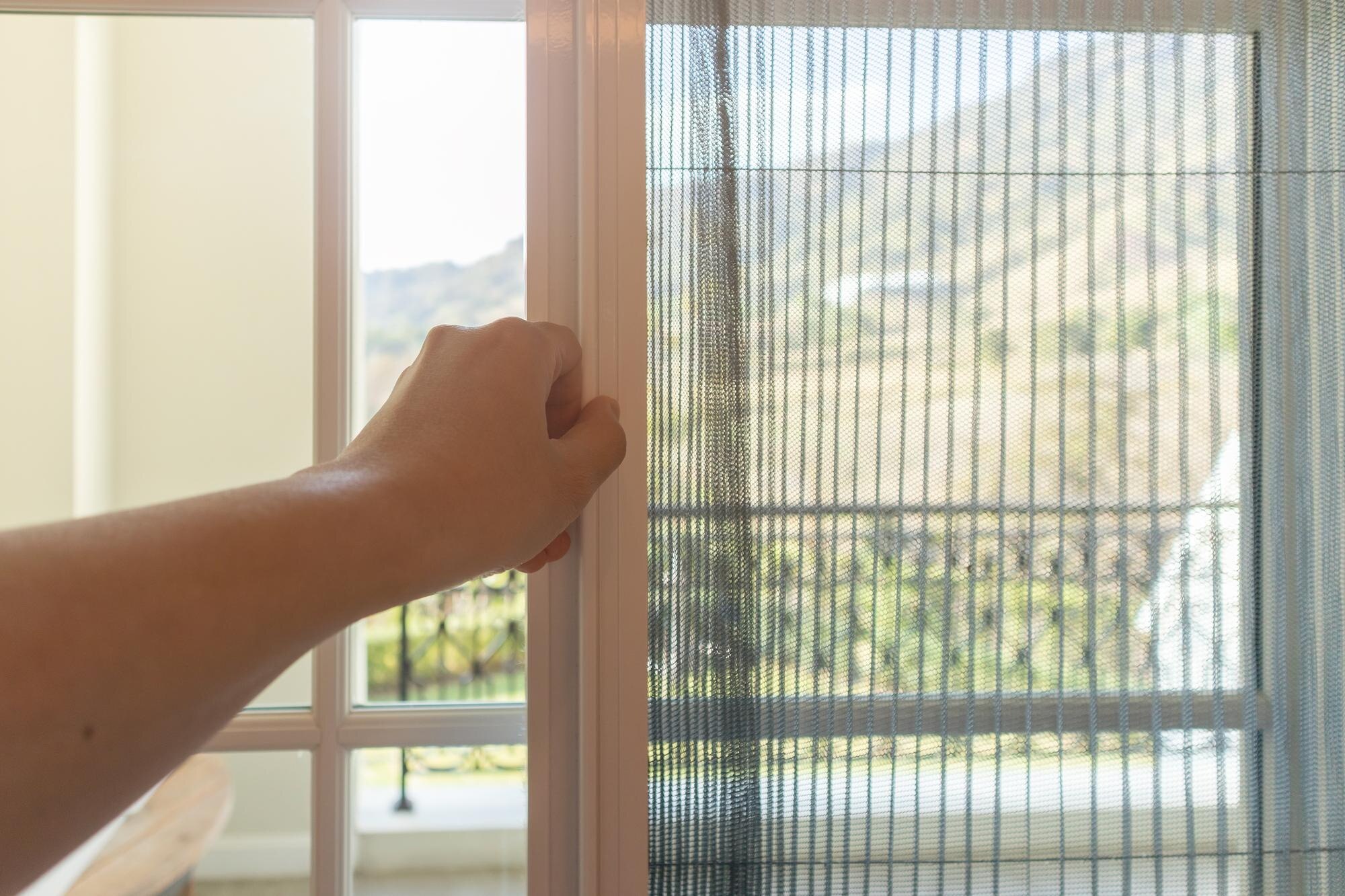
A pleated mosquito net mechanism moves a flexible curtain sideways rather than winding it onto a roller. As you pull the handle, the accordion mesh travels through the head and sill tracks, while each pleat opens into a flatter section behind the leading edge.
The handle transfers your force to the screen’s moving profile, keeping the mesh under controlled tension.
Continue pulling and the open mesh spans the window or door opening until the leading profile reaches the opposite end stop. The pleated mesh folds remain connected along the curtain, so they expand in sequence instead of swinging as separate panels.
At full closure, the profile presses into the receiving frame or meeting profile, creating the intended insect barrier.
Pull the handle back and the sequence reverses: the leading profile returns along the tracks, the mesh compresses, and the pleats gather into a compact stack at the parking jamb. The parked stack takes less width than the deployed screen, but it still occupies part of the opening and requires space beside the frame.
Smooth guide track movement depends on parallel, unobstructed tracks. A skewed opening, dirt in the sill channel, or a track blocked by hardware increases resistance; the pleats can lean, and the handle may bind before the screen closes completely. A gentle, even pull protects the mesh and keeps the folds aligned.
The Tracks, Frame and Closing Edge That Form the Barrier
The barrier works only when the mesh remains captured from top to bottom. A head track guides the upper edge, while the sill track supports and guides the lower edge; the jamb track closes the fixed side of the opening.
Together, these tracks keep each pleat in its intended plane instead of allowing the curtain to bow away from the frame.
Pulling the operating handle moves the leading stile along the tracks and spreads the accordion folds across the opening. At the closed position, the end stop sets the travel limit so the stile reaches the same position every time.
Closing profiles on the moving stile and jamb provide the final contact line; they must meet continuously rather than touch only at the top or bottom.
The most common paths for insects are:
- A corner where the head, sill and jamb tracks do not meet tightly
- A bottom gap caused by a sill track that is lifted, damaged or poorly seated
- A moving stile that stops short of its jamb because the end stop is misplaced
- A meeting line between two leaves where the closing profiles do not align
Keep the tracks free of grit, leaves, insects and construction dust. Debris increases handle force and can stop the stile before the profiles close. Specify track cleaning, end-stop and magnet inspection, and replacement steps for damaged mesh or guides at handover.
Tracks must also be parallel and the opening square; otherwise pleats skew and the leading edge binds.
Single-Sided, Centre-Opening and Multi-Panel Layouts
A bi-parting screen is usually the practical choice for a wide opening because two leaves halve each panel’s travel and width. A single-sided pleated screen suits narrower openings or situations where the mesh must park at one jamb.
| Option | Movement | Best fit | Centre detail |
|---|---|---|---|
| Single-sided pleated screen | One leaf travels from one jamb to the other | Narrow to moderate openings with clear parking space | No centre joint; the closing stile meets the opposite jamb |
| Bi-parting screen | Two leaves travel from the centre toward the jambs | Wide doors and windows | The two meeting stiles must close the insect path continuously |
| Multi-panel layout | Several leaves share the opening | Openings beyond one system’s tested panel size | Intermediate meeting rails add joints, guides and alignment points |
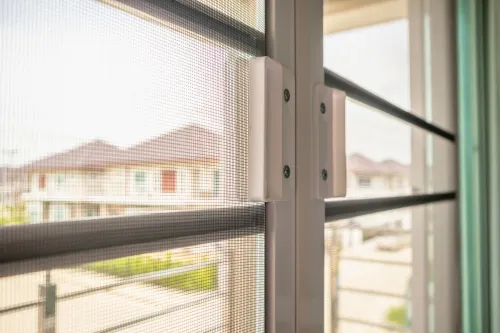
A centre-opening insect screen creates a joint at the middle. The meeting stiles may use magnets, overlapping profiles or a latch; the chosen detail must remain closed from head track to sill guide.
A loose join, mismatched rails or a gap under the bottom guide becomes an insect entry route even when both leaves are shut.
Do not choose by opening width alone. Ask for the system’s tested maximum leaf width and height, operating force and required panel count. Each added leaf reduces uninterrupted mesh area and adds frames, pleat stacks and meeting stiles, so airflow and the view feel more restricted.
Keep the head and sill tracks parallel: an out-of-square opening can skew pleats and make a meeting stile bind before closure.
Measurements and Clearance Checks Before You Order
Measure the finished opening, not the rough masonry void, and confirm room for every track, parked stack and operating handle before ordering.
1. Record the finished width at the head, middle and sill, then use the smallest figure. Measure the finished height at the left, centre and right jambs, again using the smallest figure. Note skirting, tiles, sealant, uneven plaster or thresholds that reduce the usable opening.
2. Check opening squareness by measuring both diagonals from corner to corner. Unequal diagonals indicate a twisted opening; head and sill tracks may not remain parallel, causing pleats to skew and the leading stile to bind. Send both diagonal measurements to the supplier and ask for the system’s permitted difference.
3. Measure the reveal depth: the flat, usable surface from the opening edge to the obstruction behind it. Confirm that it accommodates the head and sill tracks, side profiles and fixings without striking glass beads, handles, hinges or door frames.
4. Map clearance through the full travel path. Allow space for the folded mesh stack at its parked jamb, the handle’s grip, and any centre meeting profiles or magnets. A swinging door, curtain, security grille or window handle can block movement even when the opening dimensions fit.
5. Ask for the tested maximum panel width and height, required mesh tension, and whether your dimensions need two leaves. Do not accept a universal “large opening” claim; the manufacturer’s tested limit determines whether the layout will run reliably.
Check that the sill is level, rigid and free of standing water before fixing a bottom track.
Choosing the Mesh and System for Real-World Use
For a wide opening used every day, compare the operating path before comparing appearance. A pleated system parks beside the opening and needs little swing space; its practical limit is the supplier’s tested panel width, height, tension and operating force, not a universal size.
| Option | Main advantage | Limitation |
|---|---|---|
| Pleated | Compact side parking; suits frequent passage | Tracks and folds need cleaning; quote tested maximum dimensions |
| Roll-down | Disappears upward when unused | Wind movement, spring wear and bottom sealing affect reliability |
| Hinged | Simple construction and firm closing edge | Requires clear swing space; awkward across wide openings |
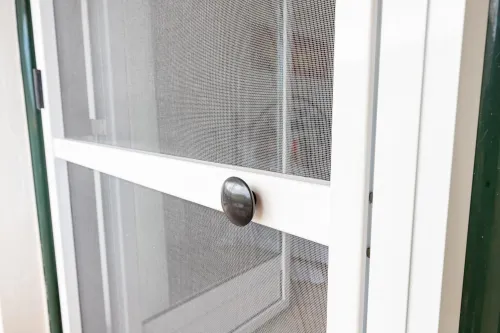
| Sliding-panel | Rigid leaves and predictable movement | Needs parking space and overlapping meeting rails |
| Fixed | Lowest operating complexity | Blocks access until removed |
Specify the mesh aperture, yarn diameter, material, colour and coating. CDC guidance commonly uses 16 holes per linear inch or smaller for mosquito exclusion, but aperture in millimetres or micrometres is the better comparison: midge mesh with finer openings can reduce airflow, daylight and cleaning tolerance.
Dark mesh visibility is usually better than light mesh visibility, while smaller openings increase pressure drop.
Ask for wind testing, perimeter-gap details, maximum panel dimensions, replacement-mesh availability and cleaning instructions. Delmen Nets 9650012393 should provide those details for the quoted configuration rather than relying on “mosquito mesh” as a specification. Treat the assembly as an insect barrier, not a security grille, fall guard, pet barrier, bird screen or pollen filter.
Related product
 | Pleated Mesh Systems Manufacturer and Supplier in Gurgaon Delmen Nets is the manufacturers and the suppliers of an excellent and superior quality of Pleated Mesh Systems... View product → |
Frequently asked questions
How does a pleated mosquito net open and close?
A flexible accordion mesh curtain slides sideways through head and sill tracks instead of winding onto a roller. The pleats fold together when parked and spread across the opening when closed.
Which pleated net layout suits a large opening?
Use a single-sided layout when one clear parking side exists. Choose centre-opening panels for wide access from both sides, or multi-panel systems when the opening needs several moving sections.
What measurements must you check before ordering?
Measure width and height at multiple points, then check whether the head and sill are level. Confirm track depth, frame clearance, handle clearance and the available space for the folded mesh.
How do you choose mesh and system construction?
Base the choice on insect size, ventilation needs, daily traffic, pets, cleaning demands and exposure to wind. Compare mesh strength, track design, closing-edge contact and replacement access rather than appearance alone.